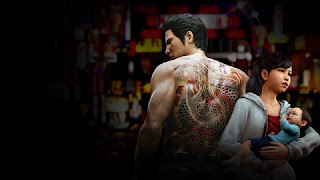
The Yakuza series or as it is now known, to us because of old translation issues, Like a Dragon is a series of videogames that started back in 2005 on the Playstation 2.
It follows for the most part the protagonist Kazuma Kiryu as he tries to live some semblance of a life, as he goes into, leaves, returns, fights and traverse the japanese underworld. It has a lot of colorful characters, mostly criminals, that show us in their own way that you can be a good person even if you are surrounded by evil and tragedy.
Here i will present a brief summary of each game, avoiding major spoilers but as the games are serialized the beginning of the next one can ruin the surprise of the previous one, so just take that into account. Hopefully this will make you want to try one or if possible all of them, have fun.
Yakuza (Like a Dragon) 1 - 2005 (Remake: Kiwami - 2016)
10 years had passed and Kazuma Kiryu the Dragon of Dojima, just got released from prison for killing his own boss, having being expelled from his Yakuza clan, because it is a serious crime even for them, he now needs to reconect with all his friends and family because a huge conspiracy is on its way, one that could change what happened or rather recontextualize what happened in the past.
Yakuza (Like a Dragon) 2 - 2006 (Remake: Kiwami 2 - 2017)
A year had passed since the incident in 2005, and now Kiryu is living with his not-official daughter Haruka peacefully for once. But trouble comes again when a powerful new force from an old enemy join forces with another ancient enemy and they are trying to disrupt the peace that everyone is trying to achieve. So now Kiryu needs to return so he can help his friends and he can rest easy once again.
Yakuza (Like a Dragon) 3 - 2009
3 years later, Kiryu, now taking care of an orphanage with Haruka, has trouble again when now an even bigger conspiracy than in the first one involving the Japanese government, the United States and his own ex-clan are coming after his orphanage and are threatening his new family. With new and old friends reuniting this, funnier and weirdly tropical, adventure will begin.
Yakuza (Like a Dragon) 4 - 2010
A money lender who charges no interest named Shun Akiyama starts his day as any other, but a seemingly little incident starts a chain reaction that will have huge ramifications even recontextualize the past (again!!), he is joined by Taiga Saejima, a prison fugitive, Masayoshi Tanimura, a "corrupt" cop and a certain Dragon that have returned because he sense something that can affect everyone involved.
Yakuza (Like a Dragon) 5 - 2012
Some years have passed and now Kiryu is a Taxi Driver named Taichi Suzuki in another city, he sees Haruka on TV and gets upset, and you have to question what happened, where is the orphanage and why everyone looks so miserable. But trouble rises again (you have to get used to the big conspiracies), joined again by Akiyama, Saejima, Haruka who became an idol, and a disgraced baseball player named Tatsuo Shinada, Kiryu has to get back to the world and do everything in his power to stop the threat and protect everyone even if it involves giving up his dreams.
Yakuza (Like a Dragon) 0 - 2015
This one takes place 20 years before the first one, it is a good entry point into the series despite having a lot of references to the other ones. Kazuma Kiryu, not even known as a Dragon, is trying to climb and become a big shot in the Yakuza, he really doesn't know that getting there (and much later getting out) is going to be incredibly difficult.
Yakuza (Like a Dragon) 6 - 2016
Kiryu is out of prison again now having washed away all of his crimes and it's finally ready to return to his normal life but oh no!! Haruka disappeared and went to Onomichi, which is in Hiroshima, and had an accident in Tokyo that left her comatose, she also has a baby with her. Kiryu with so many questions set out to Onomichi to get all the answers but, weirdly for this series, get involved in a conspiracy that doesn't involves him for once but he will resolve nonetheless.
Like a Dragon (Yakuza 7) - 2020
Kasuga Ichiban gets thrown in jail to cover for his Yakuza family captain's crime, what should have been a few years becomes 20 as something weird is happening inside the clan and when he gets out he discovers that the whole world not only in the technological sense has changed. He now needs to gather his strength and put himself in the, as he puts it, become the hero that (maybe even Japan) really needs.
Like a Dragon Infinite Wealth (Yakuza 8) - 2024
Having, presumably, saved Japan Ichiban puts down the hero cape and is finally living on the right side of the law, helping former yakuza back into society. But trouble appears again as he is framed for things that doesn't necessarily happened and his reputation as the Hero is destroyed. His former captain appears before him and shows him a shocking truth, Ichiban now on his way to Hawaii doesn't really knows what to expect but we do, some gigantic conspiracies that will keep us entertained for hours.
So that's it, I left out a couple of spinoff games that are not really necessary to understand what is happening in the main series because this list will be too long, this games are really fun and a lot more people should be able to enjoy them. Currently not every one of them are in Spanish, only 7 and 8, subtitles only, but if you have a good understanding of English and even Japanese for that matter you should check them out you will have a lot of fun and learn a lot about so many topics you haven't even considered.
Or if this is too much trouble you can also check the TV series that just came out.
References:
How to Play the Yakuza Games in Chronological Order - IGN - IGN Website 2020
Yakuza | Your Next Favorite - HyperBit Hero Youtube Channel
Yakuza 0 ha sido traducido al español por un fan y el parche ya está disponible - HobbyConsolas Website 219
Todo lo que necesitas saber de la serie Yakuza - IGN Website 2018
Juegos de Yakuza - 3DJuegos - 3DJuegos Website
(1) The Best Yakuza Game - A Yakuza 3 Analysis - YouTube - CurveNastyJr Youtube Channel


.jfif)
.jfif)